
On July 15, 2026, the ore stopped moving at Ada Tepe. Final blasting had already finished in April. What’s happening now is the part every mining company would rather you didn’t watch closely: closure, dismantling, and the word they’ve built an entire microsite around rehabilitation.
Here is what’s true, without decoration.
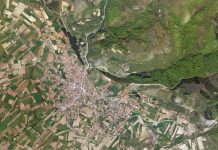
Ada Tepe was never a clean origin story. It began in 2009 as a proposed open-pit, cyanide-leach gold mine on a hill outside Krumovgrad, inside a Natura 2000 protected area, in the Eastern Rhodope mountains one of the most biodiverse corners of Europe. The concession was granted, according to a formal complaint later filed with the European Parliament, without a proper environmental impact assessment and without the Habitats Directive assessment EU law required. Ten thousand people signed against it. The mayor of a neighboring village asked, on the record, why a private company and a ministry in Sofia got to decide his village’s fate. Protests reached Greece and Turkey, both downstream on the same river system a cyanide failure would have poisoned.
The mine got built anyway but not the mine that was first proposed. Cyanide was dropped. Flotation went in instead: seventy-five percent gold recovery instead of cyanide’s ninety-five, a technology choice that cost the company yield to buy down the worst-case risk. That change didn’t come from the company’s conscience. It came from a decade of people who refused to be quiet.
From 2019 to 2026, Ada Tepe ran. These numbers are real: over $164 million invested, roughly 165 million euros paid into Bulgarian state and local budgets, hundreds of jobs, dozens of people who came home from abroad to take them. Pretending a mine produces nothing but harm is its own kind of lie, and lies don’t protect mountains but precision does.
The company calls it a “Legacy Microsite.” A regional mayor calls it a model for how mining and protected land coexist. Both of those framings come from the people who benefit from you believing them before the proof is in the ground. Rehabilitation at Ada Tepe started this year. The soil hasn’t finished healing. The water tables haven’t had a decade to prove they hold. A brochure calling something a legacy in its first season is marketing, not evidence construction claims completion before the foundation has cured.
Here is the part that should stop you cold: the machines don’t retire. They travel.
DPM isn’t mothballing the Ada Tepe processing plant. It’s dismantling it crusher, mill, flotation cells, the exact chain that will handle Čoka Rakita’s ore and shipping it to Serbia, to Homolje, to a mountain above Laznica that is made of karst, not the Rhodope’s granite-adjacent ground. Same company. Same equipment. Same playbook: propose the aggressive version, absorb a decade of resistance, concede the technology that costs less human trust, build the softened version, call it a environment friendly model before the closure has finished proving anything.
Krumovgrad’s fight bought Krumovgrad a mine without cyanide. It did not buy Krumovgrad a finished answer on whether the land actually comes back the way the microsite promises that question is still being asked, right now, in real time, on the same hill where the ore just stopped moving. Homolje does not have to wait for that answer to arrive by press release. It has the entire history of Ada Tepe as the rough draft a decade of what worked, what didn’t, and exactly which fights forced which concessions sitting in public record, in European Parliament questions, in the company’s own filings, before a single crate of that dismantled plant reaches Serbian soil.
The rehearsal already told you the ending is negotiable. It is not written yet for Čoka Rakita. That’s the whole point of watching the rehearsal instead of waiting for the reviews.