
There is a mountain in eastern Serbia that has survived empires, wars, and forty years of Yugoslav industrialization without losing its springs. Now it is being asked to survive a feasibility study.
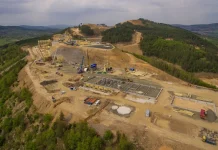
Čoka Rakita is not a rumor. It is a filed plan, a filed technical report, a company with two hundred million euros already paid into another country’s treasury for a mine just like this one Ada Tepe, Bulgaria, which stopped processing ore this July and is now being dismantled crate by crate and shipped here, to Laznica, Serbia, to run again on a different mountain. That is not a metaphor. That is the literal machinery.
So let’s not pretend this is a story about villains. It’s a story about a trade. Every serious story about resource extraction is. The question worth asking, in public, before the plan is adopted, is simple: what exactly is on each side of the scale?
The case for building
Let’s start with what’s true, because a case built on your opponent’s weakest argument is not a case, it’s theater.
Gold and copper are not going out of demand. The world building electric grids, batteries, and electronics wants more of both, not less, and Serbia sits on some of it. A mine here means jobs in a region the Žagubica municipality that has few. It means concession fees and taxes that, on the Bulgarian precedent, are not trivial: DPM’s Ada Tepe mine alone paid roughly 165 million euros into Bulgarian state and local coffers over its operating life, on top of a 164-million-euro capital investment and payroll for hundreds of local workers, some of whom came home from abroad to take the jobs. If Čoka Rakita performs even close to that, Žagubica is being offered a number that matters to real households, not just an abstract thing.
And technologically, this is not 2021’s plan. The original Čoka Rakita concept was an open pit using cyanide. That plan is dead killed by local and public resistance, the same resistance now being asked to stand down. What’s proposed instead is underground extraction using gravity concentration and flotation, the same non-cyanide process DPM ultimately used at Ada Tepe after its own decade of protest. Flotation recovers less gold than cyanide roughly 75% against cyanide’s 95%, by the company’s own account which is, perversely, evidence that the safer method costs the company money. That’s a real trade-off made in the safer direction, if it is done like that and not differently and pretending otherwise isn’t honesty, it’s propaganda in the other uniform.
The case against building here, specifically
Now the part that does not disappear just because the cyanide did.
This is karst. Porous limestone, riddled with sinking rivers and springs, sitting directly in the catchment of the Mlava and Pek. Karst does not forgive engineering mistakes the way granite does water in karst does not care about your permit boundary, it goes where the rock lets it, often to a spring five kilometers away that nobody was watching.
A tailings storage facility on this terrain is not “no cyanide, therefore no risk.” It’s a different chemical, on the same fragile plumbing, and if it fails, the failure is not local it is regional, and it does not reverse.
And the process that’s supposed to tell everyone whether this specific ground can take it hasn’t happened. No hydrogeological study preceded the plan. No Strategic Environmental Assessment was published for the public to actually read and respond to, which is not a technicality, it’s the part of Serbian and EU law that exists specifically so a decision like this one isn’t made blind. No biodiversity assessment to the international standard that exists precisely to catch this kind of risk. No study comparing eight years of extraction against thirty-plus years of the alternative economy already forming here honey, organic agriculture, ecotourism into a landscape that includes three Important Bird Areas becoming Natura 2000 sites, eighty-one recorded bird species, and cave systems sheltering more than twenty-five bat species that have nowhere else to go once the caves are gone.
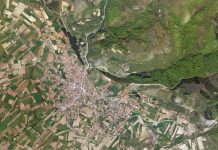
And the villages closest to the mountain Laznica, Žagubica were left outside the formal boundary of the plan that decides their water’s fate. That is not an oversight a company makes by accident. That is a plan built to avoid the people most entitled to object to it.
The actual question
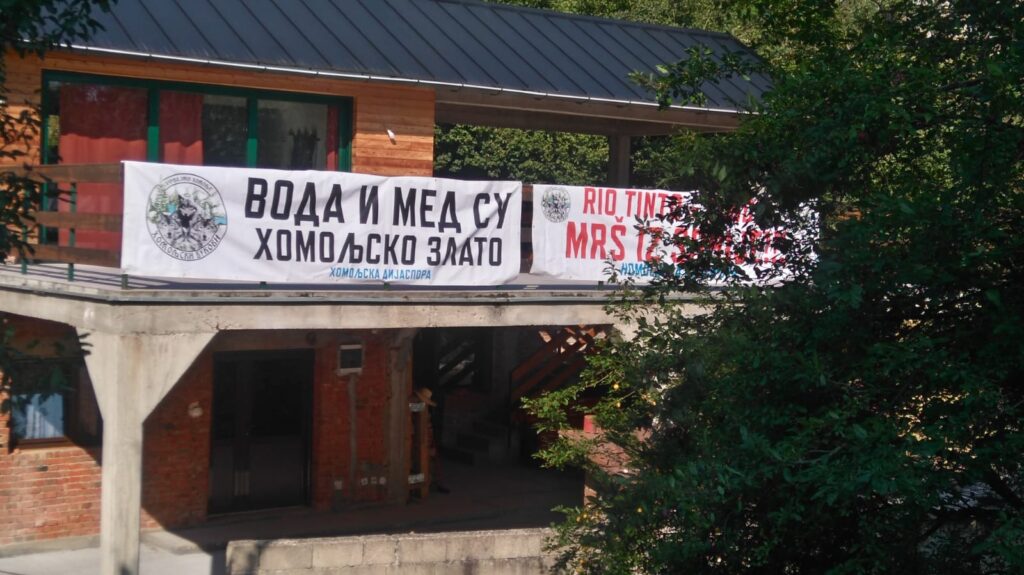
Ada Tepe is the honest preview of what “successful” looks like here: real jobs, real revenue, a mine that stopped using cyanide because a decade of people refused to let it use cyanide. That is not nothing. But Ada Tepe is also only weeks into its own rehabilitation the land hasn’t yet proven it heals the way the brochure says it will. Krumovgrad’s answer took ten years of sustained public pressure to arrive at “safer, not safe.” Homolje is being asked to accept “safer” on trust, on a faster timeline, on more dangerous terrain, without the studies that would let anyone check the company’s homework before the concrete is poured.
The trade might still be worth making. But not this version of it not the one with no hydrogeological study, no published assessment, and the two villages closest to the mountain sitting outside the map.
Build the mine that survives an honest study, or don’t build this one. Homolje has already proven, once before, that the terms can be changed.
THE REAL PROBLEM
Cyanide heap-leach and/or gravity concentration and flotation gold mining carries documented risks:
- Tailings dam failures (Mount Polley, Brumadinho, Baia Mare)
- Groundwater contamination from seepage
- Cyanide transport accidents affecting communities along routes
- Long-term acid mine drainage after closure
These have all been ruled or argued as human rights violations in multiple jurisdictions particularly the right to water, health, and a healthy environment.
LEGITIMATE STRATEGIC LEVERS
If you want to stop or constrain a specific mining operation, the high-leverage moves are:
…..