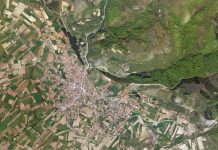

In the Homolje hills of eastern Serbia, exploratory drilling by the Canadian company Dundee Precious Metals now trading as DPM Metals has already left a chemical signature in local springs. Residents of Laznica have testified that water their families drank for generations became undrinkable after drilling began, with arsenic, aluminium, copper and cadmium among the substances found. That matters far beyond one village, because the limestone underneath Homolje is not a barrier. It is a plumbing system. The Tisnica river sinks underground and resurfaces at vrelo Mlave, the strongest karst spring in eastern Serbia and one of the largest untapped drinking-water reserves in the country. Contaminate the one, and you have contaminated the other. So the question is no longer whether mining can theoretically be done cleanly. It is whether this geology, this regulatory record, and this specific company’s track record leave any room for that theory to hold.
What Is Actually Happening in the Homolje Hills
Let’s start by clearing up a confusion that muddies almost every conversation about mining in Serbia. Rio Tinto is not the company operating in Homolje. Rio Tinto’s controversial Serbian venture is the Jadar lithium-borate project in the Jadar valley in the west of the country a completely different deposit, a different mineral, and a different fight. The company holding exploration and development rights across the Homolje hills is Toronto-based Dundee Precious Metals, operating through Serbian subsidiaries including Avala Resources and DPM Crni Vrh. Chinese-owned Zijin, meanwhile, runs the enormous copper and gold complexes at Bor and Majdanpek just to the east. Three separate actors, three separate stories but only two of them are pressing directly on the Mlava catchment, and understanding which is which is the difference between an argument that survives scrutiny and one that gets dismissed in the first paragraph.
Two Projects, One Company, One Watershed
Dundee is advancing two distinct things in the same general area, and they get conflated constantly. Čoka Rakita is a high-grade underground gold deposit in the Crni Vrh area of Žagubica municipality, roughly 35 kilometres north-west of Bor. Potaj Čuka – Tisnica is an older, separate exploration licence covering parts of south-eastern Žagubica and south-western Majdanpek, including the cadastral areas of Laznica and the villages of Jasikovo and Leskovo. The two projects have very different technical profiles: Čoka Rakita is a deep, narrow, rich underground orebody processed by flotation, while the Potaj Čuka–Tisnica concept has historically been built around open pits and heap leaching across a planning zone of about 292 square kilometres roughly 39 percent of Žagubica municipality. Both sit inside the same hydrological neighbourhood. Both drain, one way or another, toward the Mlava and Veliki Pek basins, and from there to the Danube.
The Numbers Behind the Gold Rush
The economics explain the urgency, and they are worth looking at honestly rather than dismissing. Čoka Rakita went from discovery announcement in January 2023 to a maiden resource estimate of 1.78 million ounces in December of that year an unusually fast timeline in an industry where a decade is normal. The December 2025 feasibility study put the project’s net present value at roughly 782 million dollars, up from 735 million in the earlier pre-feasibility work, with total production of about 41 tones of gold over a ten-year mine life. At a gold price of 3,500 dollars an ounce, the company’s own sensitivity analysis showed the value nearly tripling to around 2.2 billion dollars. Against that, what does Serbia collect? At the five percent royalty rate, roughly 39 million dollars over the life of the mine. Ask yourself whether that figure sounds proportionate to a permanent risk to the drinking water of an entire region.
| Čoka Rakita | Potaj Čuka–Tisnica | |
|---|---|---|
| Mining method | Underground | Open pit (as planned) |
| Processing | Gravity + flotation | Heap leaching (cyanide, contested) |
| Planning area | Crni Vrh, Žagubica | ~292 km², Žagubica + Majdanpek |
| Mine life | ~10 years | ~7–8 years |
| Gold output | ~41 tonnes | ~15.5 tonnes (early estimate) |
| Capital cost | ~$381 million | ~$186–211 million |
| Current status | Feasibility complete; construction targeted early 2027 | Spatial plan under public review |
Construction at Čoka Rakita has slipped from the originally announced mid-2026 start to early 2027, with first processing targeted for 2028. That slippage is not a sign the project is stalling. In mid-2026 the company began dismantling processing equipment at its Ada Tepe mine in Bulgaria, which ceased production in April, specifically to refurbish and install it at Čoka Rakita. Equipment is already in motion. Meanwhile, roughly 500 direct and indirect jobs are being promised when operations reach full capacity a figure worth holding up against the eight to ten years those jobs are projected to last.
The Karst Connection No Engineer Can Design Around

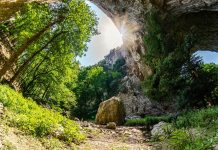
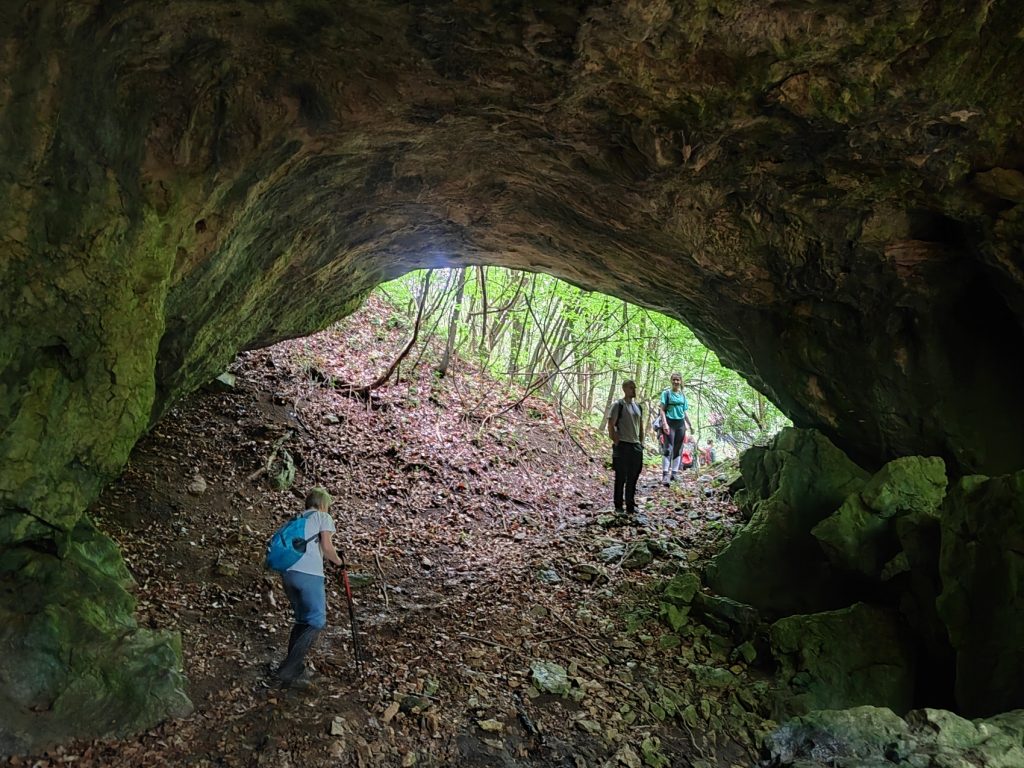
Here is where the geology stops being an abstraction. Karst is limestone that water has been dissolving for millions of years, and the result is not rock so much as a sponge riddled with conduits, caves, sinkholes and underground rivers. The Beljanica–Kučaj–Homolje complex contains more than 150 documented speleological features. In ordinary terrain, a spill spreads slowly through soil, gets filtered, gets diluted, and gives you time to respond. In karst, water can travel kilometres in a day through channels nobody has mapped. Think of it as the difference between spilling wine on a thick carpet and spilling it on a marble floor with the drains open. One you can blot. The other is simply gone, and it reappears somewhere you did not choose.
Why Tisnica and the Mlava Spring Are the Same Water
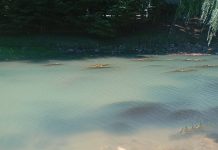
This is not speculation, and that distinction matters enormously for anyone making the case publicly. Zoran Stevanović, hydrogeologist and retired professor at the Faculty of Mining and Geology in Belgrade, has stated plainly that the hydraulic connection has been proven: the Tisnica sinks underground and its water is conducted to the Mlava spring. His conclusion follows directly pollute the Tisnica and you directly threaten a source he describes as a precious reserve for the future supply of cities in eastern Serbia and the Pomoravlje region. The Ecological Alliance of the East has pointed out that the spring sits only about six kilometres from the first planned pits. Six kilometres in karst is not a buffer zone. It is a corridor.
Can a Poisoned Karst System Ever Be Cleaned?
The honest answer from the people who study this is: partially, expensively, and with no guarantees. Stevanović has framed the question as one of who pays and why. A great deal can be done technically, he has said, but the cost lands on the state long after the company’s few profitable years are over. His supporting evidence is difficult to argue with Serbia already has roughly 250 mining waste dumps left behind by previous operations. There is a register of them. There is no meaningful programme of remediation, and no budget line that treats cleaning them as urgent. If the country has not remediated what it inherited from decades of state-owned mining, on what basis should anyone expect it to remediate a contaminated karst aquifer under a foreign concession that has already closed?
Pollution That Has Already Been Documented
The strongest version of this argument does not rest on hypothetical future accidents. It rests on what has already been measured during a phase the company calls “research.” Exploration in Homolje has involved deep drilling on a large scale Čoka Rakita alone was defined by more than 80,000 metres of drilling in its first year, later infilled to a grid as tight as 20 by 20 metres in the high-grade core. Deep drilling produces slurry: a mixture of ground rock, water and drilling additives, and the ground rock in a polymetallic sulphide deposit is by definition rich in the metals everyone is worried about. Where that slurry has leaked, seeped or been inadequately contained, the metals go with it.
Testimony from Laznica
Before the International Rights of Nature Tribunal, Rade Mošić of Laznica described how his family’s water source, used across generations, became undrinkable after DPM’s drilling activities contaminated local waters with arsenic, aluminium, copper and cadmium. That testimony was not delivered in isolation. Witnesses also documented forest destruction, wildlife displacement, and this deserves attention surveillance and intimidation directed at local activists. In March 2026 the Tribunal issued its judgment finding the Serbian government and Dundee Precious Metals responsible for directly and indirectly violating the Rights of Nature in Homolje, and in May 2026 it formally submitted those findings to the Bureau of the Bern Convention, where the region is already the subject of Complaint 2022/6. The Tribunal’s assessment is that extractive expansion in Homolje threatens 143 species, of which 57 are listed under the Bern Convention, including the Eurasian lynx and the golden eagle.
Drinking Water Trucked to Boreholes While Villages Ration
There is a detail here that captures the whole imbalance more sharply than any statistic. Žagubica has faced water shortages for years. During that same period, water has been drawn from the municipal supply and hauled up into the hills to service exploratory drilling. People and livestock going short while drinking water is trucked to boreholes is not an abstract environmental risk it is a present-tense allocation decision, made in public, in favour of a company that has not yet built anything. Local organisations, including Rendžeri istočne Srbije, say they have repeatedly documented the company breaching nature-protection conditions during exploration, destroying habitats of protected species and abstracting water from streams where those species live. Their reports and formal complaints, they say, were met with silence or dismissal.
The Mechanisms of Risk, in Plain Language
Why do mining projects poison water even when nothing dramatic goes wrong? Because the chemistry does not require an accident. It only requires exposure.
Acid Rock Drainage and Metal Mobilisation
Gold and copper deposits in this region sit in sulphide minerals pyrite and its relatives. Underground and undisturbed, those minerals are stable. Crush them, stack them in a waste dump, and expose them to rain and oxygen, and they oxidise into sulphuric acid. That acid then dissolves the metals locked in the surrounding rock, and what leaves the waste pile is not water with a bit of dust in it but an acidic solution carrying copper, zinc, arsenic, cadmium and cobalt. This process does not stop when the mine closes. It runs for decades, sometimes centuries, powered by nothing but weather. Researchers studying the Bor and Majdanpek areas have traced polluted river stretches roughly 100 kilometres downstream, all the way to the Danube. That is the mechanism operating in ordinary conditions, with no spill and no failure just rock, air and rain doing what they do.
The Cyanide Question That Never Fully Closed
The Potaj Čuka–Tisnica concept originally described crushing ore and spreading it across roughly 36 hectares of open ground to be sprayed with sodium cyanide solution heap leaching, the method that makes low-grade ore profitable. Local organisations say that after they alerted the public, the plan was withdrawn. Withdrawn, though, is not the same as prohibited. The licence area still exists, the spatial plan process is still moving, and gold prices have risen dramatically since the original proposal was drafted.
Toplica Marjanović, former deputy director for technology and ecology at the Bor mining and smelting complex, has raised a related and more immediate concern about Čoka Rakita: the planning documents, in his reading, do not describe all the processes used to produce final gold concentrate, even though those stages involve chemicals capable of significant environmental harm. A process not described in a document is a process not assessed, not permitted with conditions, and not monitored.
What Baia Mare Taught Europe
In January 2000, a tailings dam at a gold operation in Baia Mare, Romania, failed and released roughly 100,000 cubic metres of cyanide-laced water into the Someș, then the Tisza, then the Danube. Fish died along hundreds of kilometres. Drinking water supplies for over two million people were disrupted across several countries. The operator had permits. The operator had assurances. The containment failed anyway, in winter, in a European country with mining expertise, in a river system with far less capacity to hide contamination than a karst aquifer has. If a surface river carried that damage across three national borders, what would an underground network do with it?
The Cumulative Load on Eastern Serbia
No project in this region operates on a blank page. Sixty kilometres away, Zijin’s operations around Bor and Majdanpek supply a live demonstration of what industrial-scale extraction does to a place over time. Sulphur dioxide, arsenic and lead have repeatedly exceeded health-protective thresholds in the Bor area. PM10 particles carrying lead, cadmium, nickel and arsenic have been documented in the air people breathe daily. A sample from the Pek river showed copper at seventeen times the regulatory limit, with elevated arsenic and lead in river sediments. Villages near the operations have faced water restrictions. The company points to hundreds of millions of dollars spent on environmental improvement, and researchers at Bor’s own Technical Faculty respond that the particles and arsenic are still there. This is what the mature version of the promise looks like, three decades on: not a catastrophe, exactly, but a slow subtraction from the habitability of a region. Homolje’s water and Bor’s water belong to the same eastern Serbian system, and the burden accumulates.
The Paperwork Problem: Assessment After the Fact
Serbian and international law both require that a strategic environmental assessment be prepared and made public so that citizens can participate meaningfully in decisions. What has happened instead, according to the Platform for Social Development and Innovation (CORE), is an announcement that the strategic assessment for the Čoka Rakita spatial plan would be produced thirty days after the draft plan is adopted rather than developed alongside it. That inverts the entire purpose. The point of such an assessment is to compare alternative solutions and identify the least damaging one; produced after the plan is settled, it becomes a ratification exercise. Rendžeri istočne Srbije argue this breaches Article 41 of the Planning and Construction Law, violates the precautionary and prevention principles in the Environmental Protection Law, and contravenes the Aarhus Convention, which Serbia has ratified and which guarantees timely, complete and effective public participation. The early public review for Čoka Rakita closed on 26 December 2025 over the holidays with the central questions still unanswered.
Which questions? Three stand out. Where will the mine’s water come from, and in what volumes? The planning documents do not say. Where exactly are the boundaries of the production complex? Marjanović notes they are not defined. And how, specifically, will contamination of the Mlava spring be prevented? A commitment that environmental protection will “cover a range of measures across all phases” is not an answer to a hydrogeological question.
What the Company Says, and What the Record Shows
DPM’s position is that its operations meet or exceed national and international standards, that environmental protection obligations bind every phase from exploration through closure, and that it has maintained a local presence in Serbia since 2004 and built strong regional relationships. The company also points, fairly, to its reclamation commitment at Ada Tepe in Bulgaria, where it expects around 95 percent of the mine footprint to return to the Natura 2000 network. Those claims deserve to be tested rather than assumed false.
So test them against Ecuador. In June 2025, DPM received the environmental licence for its Loma Larga gold project near the Quimsacocha water reserve. In August, activities were suspended pending an environmental management plan. In September, more than 100,000 people marched through Cuenca demanding revocation. In October 2025, Ecuador’s government revoked the licence outright, citing technical reports from the municipal and provincial authorities responsible for drinking water, and invoking the precautionary principle and the defence of water sources. Civil society organisations have separately raised allegations of intimidation and surveillance of defenders opposing the project allegations the company has responded to publicly. The pattern is not that DPM is uniquely bad among mining companies. The pattern is that when a project sits on top of a community’s water, assurances of best practice have not been enough for the people who have to drink it.
What Homolje Stands to Lose
It is easy to frame this as jobs versus trees, and that framing is wrong. Homolje, Beljanica and Kučaj form the largest continuous forest complex in Serbia, containing old-growth reserves and the country’s largest drinking water reservoir. The area hosts around 70 percent of Serbia’s mammal fauna, 23 percent of its reptiles, 130 bird species, and more than 750 plant taxa a quarter of the national flora. The first nature monuments here were designated in 1949. Homolje is also Serbia’s largest honey-producing region, with a cheese, livestock and nature-tourism economy that depends entirely on the perception and reality of clean water and clean air.
| Mining scenario | Water-and-nature scenario | |
|---|---|---|
| Duration of benefit | 8–10 years | Indefinite |
| Direct beneficiary | Shareholders, ~500 temporary jobs | Local producers, regional cities |
| State revenue | ~$39 million royalty | Ongoing tax base, avoided water infrastructure cost |
| Reversibility | Contamination effectively permanent | Fully reversible decisions |
| Risk holder | Local community and future taxpayers | Distributed, manageable |
The Rights of Nature Tribunal has proposed that the Mlava be designated part of the Emerald Network under the Bern Convention framework, and that Homolje receive permanent protection under the strictest category, potentially as a national park. That is a concrete alternative development path, not a refusal to develop.
Conclusion
What makes the Homolje case unusual is not that people are worried about a proposed mine. It is that the damage arrived during the phase that was supposed to be harmless. Springs that families drank from for generations have been reported undrinkable after drilling. Municipal water has been trucked to boreholes while villages ration. A retired hydrogeologist has stated that the hydraulic link between the Tisnica and the Mlava spring is proven, meaning the contamination pathway to eastern Serbia’s most important future drinking-water reserve is not a scenario but a mapped route. The strategic environmental assessment that should answer these questions is scheduled to arrive after the plan it is meant to evaluate. And the company advancing the project had a licence revoked in Ecuador last year over precisely this kind of water conflict.
None of that requires exaggeration to be alarming. What it requires is verification which is why the most useful thing readers, journalists and local councillors can do right now is demand documents rather than opinions. Ask for the laboratory analyses of springs near drill sites, with dates and chain of custody. Ask where the mine’s process water will be abstracted from, and how much. Ask for drill-site restoration records. Ask why the strategic assessment follows the plan instead of shaping it. Ask the Ministry to publish monitoring data continuously rather than on request. Support the Bern Convention complaint, the Emerald Network proposal for the Mlava, and independent monitoring by scientists with no contract to either side. Gold in Homolje will still be there in fifty years if the answers turn out to be reassuring. The water will not be, if they do not.
Frequently Asked Questions
1. Is the gold mine in Homolje already approved and under construction? No. Čoka Rakita has completed its feasibility study, and the company is targeting construction from early 2027 with first processing in 2028, but the spatial plan and environmental permitting processes are still running. Equipment from the closed Ada Tepe mine in Bulgaria is being refurbished for transfer, so preparation is well advanced but the decisive planning and environmental approvals have not all been issued, which means public comment still has legal weight.
2. Will cyanide definitely be used? Not at Čoka Rakita as currently designed, which uses gravity and flotation to produce a concentrate. The cyanide heap-leach concept belongs to the separate Potaj Čuka–Tisnica licence, and local organisations say that plan was withdrawn after public pressure. The licence area, however, still exists and its spatial planning process is still active, so the option has been shelved rather than legally closed.
3. How can drilling contaminate water if no mine has been built? Deep drilling produces slurry containing pulverised ore-bearing rock, which is naturally rich in arsenic, copper, cadmium and other metals. When that material enters streams or sinkholes, the metals travel with it. In karst terrain there is no filtering soil layer to slow the process, so contamination can reach distant springs quickly through underground conduits.
4. Isn’t Rio Tinto the company mining in Homolje? No. Rio Tinto’s Serbian project is Jadar, a lithium-borate deposit in western Serbia. The Homolje licences belong to Canadian company Dundee Precious Metals, now DPM Metals, through subsidiaries including Avala Resources and DPM Crni Vrh. Chinese company Zijin operates separately at Bor and Majdanpek.
5. What can someone outside Serbia actually do about this? The case is already before the Bern Convention as Complaint 2022/6, which means Council of Europe member states have a formal channel for raising it. Supporting independent water testing, amplifying documented findings rather than rumours, and pressing Canadian institutions on the conduct of Canadian-listed mining companies abroad are all avenues that have produced results elsewhere including in Ecuador.
Sources
- International Rights of Nature Tribunal, submission to the Bureau of the Bern Convention on DPM in Homolje, May 2026 rightsofnaturetribunal.org/bern-convention-serbia
- International Rights of Nature Tribunal, Serbia / Homolje case file rightsofnaturetribunal.org/homolje
- Council of Europe, Bern Convention Complaint 2022/6 on mining impacts in the Homolje Mt region
- N1, “Homolje na raskrsnici: ‘Zlatna koka’ ili pretnja vodama, ljudima i prirodi?”, 27 December 2025
- N1, “Zlato nije voda, ali voda jeste zlato” Žagubica protest coverage, August 2025
- Agencija za prostorno planiranje, PPPPN Čoka Rakita, elaborat za rani javni uvid, November 2025
- DPM Metals / Dundee Precious Metals, Čoka Rakita PEA (May 2024), PFS (December 2024), FS (December 2025) and NI 43-101 technical reports, SEDAR+
- Biznis.rs and eKapija, Čoka Rakita feasibility study coverage, December 2025
- Sputnik / B92, DPM Čoka Rakita construction timeline and Ada Tepe equipment transfer, July 2026
- Balkan Green Energy News, “Cyanide from gold mine threatens pristine nature in eastern Serbia”
- Mašina, “Homolje protiv Dundeeja! – protest u Žagubici”
- Polekol, public review mobilisation on Potaj Čuka–Tisnica, April 2026
- Reuters via Manila Times / AOL, Ecuador revokes Loma Larga environmental licence, October 2025
- MiningWatch Canada and Business & Human Rights Resource Centre, Loma Larga documentation
- Balkan Insight and Just Finance International, Bor pollution documentation
- Earthworks, “A Sacrifice Zone in the Push for Copper: Experiences from Bor, Serbia”
- Green European Journal, “Dead Rivers and Vanishing Villages: China’s Rush for Serbia’s Minerals”
- Science of the Total Environment / Groundwater for Sustainable Development, groundwater geochemistry studies of the Timok and Pek catchments